Listing A Dulcimer For Sale
Site QUESTIONS ? How do I...?
How do I edit my my for sale listing?
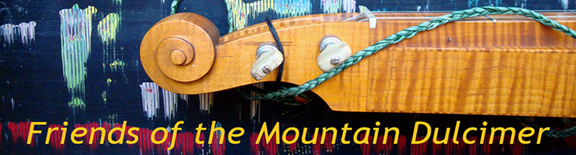
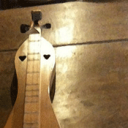
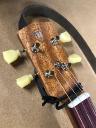
I have decided to sell my Blue Lion model IIRS; Style II, “R" for East Indian Rosewood back and sides; “S” for Brass Rosette soundhole covers. Come with the original hard case
East Indian Rosewood back, sides and scroll peghead; the soundboard is Western red cedar; the fingerboard is Honduran mahogany as are the insides of the peghead; the fretboard overlay is East Indian Rosewood.
The VSl is 26.25” originally strung with .012/.012; .014; .024w bronze wound strings. The nut and saddle slotted to accommodate either doubled melody or four equidistant string spacing.
top of the line planetary tuners. The reason I am selling it is I have decided to try to buy a Terry McCaffery all electric chromatic or a Resonator with a built-in pick-up and preamp.
$1,000 + Shipping
Jon Lilley email JonLilley49@gmail.com
The disadvantage of a floating bridge is that it is easily moved as John pointed out. I've known folks to lose them when changing strings because they took all the strings off rather than doing it one at a time. Also changing strings may move the bridge a little and throw everything off which requires a little time and effort to correct. I've built dulcimers; some with fixed as some with floating bridges. As I builder I prefer the fixed bridge.
Ken
"The dulcimer sings a sweet song."
Amazing how a little movement takes it from fire wood grade to fine......
The benefit of a floating bridge for the player is to be able to fine tune the intonation. As you switch between heavier and lighter strings, for example, slight adjustments to the placement or angle of the bridge will result in better intonation. The average player doesn't alter string gauge that much or even have an ear precise enough to hear the difference.
I once got a used Blue Lion from someone who thought the whole instrument was "off," but I got it home, adjusted the placement of the bridge and it sounded great. I still have it!
My 2 cents....
The "fixed" requires additional work on the builder, slot needs to be cut, insert needs to be correct width and height. And there is little to no forgiveness if you cut the slot in slightly the wrong spot. Once in place [correctly] there is almost no need to ever adjust in the life of the player...
"Floating" is much easier to source, and manufacture. Asks nothing more than to be a "chunk" of material, with an apex to support the strings. Easy to carve, sand, or reposition to adjust for string height and intonation. Widely adjustable... getting out of adjustment... just as easy.
The floating style is by far the "old" school of the two. When used on an un-fretted, or violin style instrument, it doesn't hamper intonation with placement. No frets, so the players fingers are selecting where on the string is the correct sound. Add a fret or two, and now the intonation is "fixed" by the placement of them and the bridge.
Many players I know have NO IDEA that moving a [moveable] bridge will change everything. They simply think that each note is a result of each fret. It helps me look SO good when I make their "off" sounding instrument sound sweet again...
Looks like another dumb question from lilley-pad. well here goes this may be more of a luthiers question then a player's. It has to do with the bridge “saddle” . I've noticed that the majority of instruments out there have a fixed bridge, but some have a floating bridge. Is the floating bridge just old school? or is there an advantage of having a floating Bridge? Thanks for the feedback
I would just like to add to @john-petry's timeline that Howard Rugg is making instruments again under the name Capritaurus. He also has great records on all the instruments they built before they sold Folkroots to Folkcraft and can likely provide some details if the label inside is still legible. He is a member here, so you could just send a private message.
John has provided all the information you need. I purchased a similar one recently except it was the model D50S, a grade up, for $100. In an auction, like eBay, you may get more. While your dulcimer has a 6 1/2 fret, it doesn't have the octave 13 1/2 fret. It would not be that attractive to modern players who want more frets (1 1/2, 8 1/2, etc.). Whoever buys it will get a nice dulcimer.
Ken
"The dulcimer sings a sweet song."
The link didn't seem to cooperate....here is a copy from the site...
Late 1960's, early 1970s, in northern California...
1968 - Howard Rugg made his first dulcimer in Felton, California.
1969 - Brothers Howard Rugg and Michael Rugg become partners. Mike came up with the CapriTaurus name: Capri (Howard) with Taurus (Michael). The first CapriTaurus dulcimer had a walnut body, a spruce top, and a carved gargoyle peghead.
During these early years, Howard built the instruments, Michael did the branding of the instruments, sold the instruments, performed at fairs, carved scroll heads, and played the instrument expertly.
Steve Jackel worked for Michael and Howard starting in 1973 (working for CapriTaurus), and he became a third partner some time in the early 1970's.
The new partnership became known as Rugg, Rugg & Jackel. RR & J then created the first FolkRoots-branded dulcimer, which was based on the original CapriTaurus plywood dulcimer. The FolkRoots line was sold wholesale to music stores.
Early 1970's, in northern Vermont...
1974 - Folkcraft Instruments was founded by David Marks in Lyndon, Vermont. David was a music supervisor in the Lyndon schools, and with his finely-tuned ear, he took the dulcimer's state-of-the-art from "okay" to "amazing". Few makers at this point were making instruments that played in tune, or had a good action. David's demanding ears took Folkcraft to the top of the pack, quality-wise. The company became known for high-quality dulcimers, and before long, David was looking for a larger facility for Folkcraft Instruments.
Back to California...
1976 - Rugg, Rugg & Jackel broke up the partnership. Steve Jackel and Howard Rugg formed a new partnership, called Rugg & Jackel. The old partnership had two "Ruggs" in the name, the new partnership reflected Michael Rugg working independently from Howard and Steve.
The Rugg & Jackel company kept the FolkRoots line, and Michael Rugg retained control of the CapriTaurus name and line of solid wood dulcimers.
And now back to Vermont...
1979 - After only a few years in Vermont, the company was so successful that David moved Folkcraft to a larger building. Folkcraft moved to Winsted, Connecticut, where it stayed until January of 2007. While in Connecticut, David Marks took the company from a one-person operation to a large (for folk instruments) national presence, with an active mail-order operation, multiple showrooms, and a store at Disneyworld.
And in Connecticut...
1989 - Howard Rugg and Steve Jackel decide to retire from dulcimer building, and they sell the FolkRoots line of dulcimers to Folkcraft Instruments. The tools, wood, and inventory are trucked from Felton, California to Winsted, Connecticut.
Now to Indiana...
In 1990, Richard Ash (the current owner of Folkcraft Instruments, which now includes FolkRoots dulcimers) retired from teaching music in the public schools, and went into business by starting up a music store in the small town of Woodburn, Indiana. The main focus was private instruction, but with a roster of active teachers, the company soon expanded to include sheet music and accessory items.
By 2005, it was time to expand, and Richard began looking for something new. He found out that David Marks was retiring from (over thirty years!) dulcimer building. The fall of 2006 took Richard from Woodburn, Indiana to Winsted, Connecticut. Richard fell in love with the company, and with the instruments, and ended up purchasing Folkcraft Instruments from David Marks.
On January 5, 2007, the paperwork was completed, and the move from Connecticut to Indiana was begun. Seven semi trucks (six enclosed, and one flat bed), a whole lot of labor, and a bit of luck took all of the tools, instruments, lumber, and work in progress to Folkcraft's new home in Woodburn, Indiana.
In 2009, Richard Ash (with his brother, Steve Ash) created the Druid Moon line of ukuleles. The new designs of ukulele feature a heavier construction than is common with contemporary ukuleles, and this gave the instruments more sustain and more warmth, making them very popular with fingerstyle ukulele players.
Folkcraft Instruments now has three main product lines - Folkcraft Instruments (mountain dulcimers, hammered dulcimers, psalteries, and kanteles), Druid Moon (ukuleles), and FolkRoots (dulcimers).
https://folkcraft.com/pages/folkcraft-through-the-years FolkRoots History....
This "may" help?? The wood kits start at about $400, The complete new ones start at about $1100, and go up to 2000 ish for the "fancy" stuff...
The lower end of yours I {a great deal, if you want to Bless someone] would be $250 ish, You can probably find a buyer in the $300-$450 range if the goal is profit.
Dulcimer pricing can go all over the map. Unless it is significant in design, woods, or maker, they generally don't hold value too well. Sad but true. Unlike guitars, folks generally don't want an "old" dulcimer...too few frets, pegs, or it doesn't have a label, or other bragging rights. I've seen plenty of awfully sweet sounding instruments that wouldn't command $50 at a garage sale...
I have an old FolkRoots dulcimer that belonged to my late wife which I never learned how to play. I would like to know any information I can get about it, as my attempts at Googling it have not turned up much. I am thinning my instrument collection and would like to sell it when I have an idea of it's worth. Any help would be greatly appreciated!
Thanks!
I've added recorders, ukuleles and micro base so I think it's more curiosity about something new [like a kid with a new toy] , or exploring, or maybe just a short attention span. 
I'm glad to hear that you contacted Warren and the he is helping you. There is nothing like going directly to the builder for help.
Ken
"The dulcimer sings a sweet song."
Mr May said the wedge-shaped bridge was not original and kindly sent me two normal ones in the mail!
One other question: I went to swap out the original machine heads on one of my May dulcimers with the same mini-rotomatics in a different color. The shop I took it to noted that the new tuners didn't quite fit correctly and had to use extra washers. I'll ask Mr May, but the shop wondered if he'd shortened the tuners somehow.
This dulcimer is green poplar and came with gold tuners, which I don't love. Black or chrome don't quite look right either. I wish there was some kind of ivory-looking option that would fit, but the space is tight and I'd rather not drill a bunch of new holes...
Todd, that looks like a very reasonable price. The one thing that you may want to ask is how it has been stored. If perhaps in an attic or a rental storage unit it may have been exposed to extremes of heat or humidity. Other than that I would go for it. Some people place extra value on those made in Connecticut. Best wishes.
Todd, that looks like a very reasonable price. The one thing that you may want to ask is how it has been stored. If perhaps in an attic or a rental storage unit it may have been exposed to extremes of heat or humidity. Other than that I would go for it. Some people place extra value on those made in Connecticut. Best wishes.
Todd, I agree with Dusty. A 1993 Folkcraft is a good instrument and it is offered at a fair price.
Ken
"The dulcimer sings a sweet song."
Todd, that is a very fair price for a Folkcraft dulcimer. A small group of aficionados especially treasure those Folkcraft dulcimers that pre-date the move from CT to IN (and now to MI?). I cannot vouch for the seller, but the dulcimer itself seems like a good deal. And it comes with a good bag, too. Make sure shipping comes with insurance; even if it costs a bit more, it might be worth it for peace of mind.
I bid $351............
Just kidding....Nice price, looks pristine too! congratulations!
Todd, I agree with Dusty. A 1993 Folkcraft is a good instrument and it is offered at a fair price.
Ken
"The dulcimer sings a sweet song."
I bid $351............
Just kidding....Nice price, looks pristine too! congratulations!
Todd, that is a very fair price for a Folkcraft dulcimer. A small group of aficionados especially treasure those Folkcraft dulcimers that pre-date the move from CT to IN (and now to MI?). I cannot vouch for the seller, but the dulcimer itself seems like a good deal. And it comes with a good bag, too. Make sure shipping comes with insurance; even if it costs a bit more, it might be worth it for peace of mind.
Dear Richard and Dusty and Ken....I WAS JUST NOTIFIED THAT THE DULCIMER IS IN FACT STILL FOR SALE ....the 1993 Follcraft list on the FOTMD site for sale. I'm wondering if you fellows would be willing to give me your opinion of it. It is said to be in good condition and seems reasonably priced. The owner has contacted me after my inquiry.
Many thanks ! Todd Metcalf
Such an insightful review, Alex! The musically curious folks who listen to the recording will be rewarded for doing so.
Hi All,
I hope you're doing well in all ways.
Here's the latest review of my new album:
https://www.ragtalent.com/post/alex-lubet-release-a-record-with-victoria-vargas-from-written-works-by-amy-levy
If you'd like to hear it, it streams in all the usual places, including Spotify and YouTube.
Have a great rest of the week.
I am selling a beautiful dulcimer hand made in Connecticut by Folkcraft in 1993, in outstanding pristine condition (please see photos). Scale length is 27 inches. Total length of the instrument is 41 inches. Currently set for DAD tuning with brand new D'Addario 0.12 0.15 0.24 strings. A fourth 0.12 string can be added. The instrument sounds great and it is easy to play with no strings buzz. Folkcraft dulcimers currently retail for over $1,000.00. The instrument comes with a quality brand new T.K. O'Brien case (a value of $65.00) included for free. I am asking for $350.00. Local pick up in Oakland County, Michigan, or shipping to Continental United States with UPS for a flat fee of $35.00. Thanks.
Todd, you are receiving good advice. I just want to make a few clarifications regarding David Lynch's student model dulcimer. His original price on this instrument was $125. By the time of his death he had to raise to price which was still under $150. He used baltic birch plywood for the back, sides, and top of the dulcimer and the price of this material had gone up. He could no longer absorb the cost of the price increase of a sheet of plywood. The peg head and the fret board on these dulcimers was walnut. All of them were finished with a light coat of Deft spray lacquer. He used either a matte or semi-gloss finish. These were very playable and good sounding instruments. Dave began by building harps and was known on various dulcimer sites as "Harpmaker." He later branched out to making mountain dulcimers.
In searching for a previous owned dulcimer keep your eyes and ears open. I've found some on Craig's list in addition to eBay, Facebook Marketplace, Goodwill, here at FOTMD, as well as some folks contacting me to see if I would be interested in their dulcimer. There are several builders in California; Blue Lion, Joellen Lapidus, and Howard Rugg are all well known, but their instruments are well above the beginner level.
Be patient and right dulcimer will find you. Best wishes in your hunt for an instrument.
Ken
"The dulcimer sings a sweet song."
Todd, As to where to look for a dulcimer, shopgoodwill.com sometimes has mountain dulcimers. I think you will do well to take your time and find one made by a known builder. You have done well by asking for guidance on this forum. I would be wary of foreign made dulcimers many of which have quality and intonation issues. It is so disheartening to get a dulcimer and then become disappointed because it does not sound right. Not a good way to begin your dulcimer journey.
Over the years I have bought 3 McSpadden Dulcimers and 1 Warren May dulcimer previously owned which had been played little to not at all. One of them still had the pick and noter in a sealed envelope. People sometimes buy on the spur of the moment then never get around to learning to play. Such a dulcimer if it has been stored properly is usually a good buy and often at a very reasonable price.
If there is a local dulcimer club, many times the members are accepting of newbies and will allow you to look at and play their dulcimers. Sometimes teachers or clubs have loaner dulcimers as well, it that is an option where you live.
Continue to look and if you see one, let us know and we may be able to offer some guidance. Best of luck on your search.
Todd, I see you've found the For Sale Forum here. That is a great place to find used instruments, although the usual caveats apply.
The reason I mentioned McSpadden in my earlier post is that McSpadden dulcimers are all good quality and eminently playable. They are also quite popular, so if you decide to sell one later on, you won't take a big financial hit. I see you've found a Folkcraft for sale here. Folkcraft are also of high quality. If you find one at a decent price, they are usually a safe bet.
You might check Craig's list for used dulcimers, but as with Ebay, the majority of instruments you find there are of questionable quality. Reverb is another online marketplace, but the prices there seem higher. And honestly, I would suggest staying away from online retailers unless you know the maker well.
As to your question about how to get your hands on a dulcimer to try them out, I can't tell you where to go in SLO itself, but I know some people in Los Osos who have a regular dulcimer gathering. If you wish, I could put you in touch with them. In the LA area there are lots of players and there are a few up in the Santa Cruz area and in the East Bay. In the summer months there are in-person gatherings you could attend when you could just ask to try out people's instruments, but not much is happening like that this time of year.
Todd, you are receiving good advice. I just want to make a few clarifications regarding David Lynch's student model dulcimer. His original price on this instrument was $125. By the time of his death he had to raise to price which was still under $150. He used baltic birch plywood for the back, sides, and top of the dulcimer and the price of this material had gone up. He could no longer absorb the cost of the price increase of a sheet of plywood. The peg head and the fret board on these dulcimers was walnut. All of them were finished with a light coat of Deft spray lacquer. He used either a matte or semi-gloss finish. These were very playable and good sounding instruments. Dave began by building harps and was known on various dulcimer sites as "Harpmaker." He later branched out to making mountain dulcimers.
In searching for a previous owned dulcimer keep your eyes and ears open. I've found some on Craig's list in addition to eBay, Facebook Marketplace, Goodwill, here at FOTMD, as well as some folks contacting me to see if I would be interested in their dulcimer. There are several builders in California; Blue Lion, Joellen Lapidus, and Howard Rugg are all well known, but their instruments are well above the beginner level.
Be patient and right dulcimer will find you. Best wishes in your hunt for an instrument.
Ken
"The dulcimer sings a sweet song."
Todd, As to where to look for a dulcimer, shopgoodwill.com sometimes has mountain dulcimers. I think you will do well to take your time and find one made by a known builder. You have done well by asking for guidance on this forum. I would be wary of foreign made dulcimers many of which have quality and intonation issues. It is so disheartening to get a dulcimer and then become disappointed because it does not sound right. Not a good way to begin your dulcimer journey.
Over the years I have bought 3 McSpadden Dulcimers and 1 Warren May dulcimer previously owned which had been played little to not at all. One of them still had the pick and noter in a sealed envelope. People sometimes buy on the spur of the moment then never get around to learning to play. Such a dulcimer if it has been stored properly is usually a good buy and often at a very reasonable price.
If there is a local dulcimer club, many times the members are accepting of newbies and will allow you to look at and play their dulcimers. Sometimes teachers or clubs have loaner dulcimers as well, it that is an option where you live.
Continue to look and if you see one, let us know and we may be able to offer some guidance. Best of luck on your search.
Todd, I see you've found the For Sale Forum here. That is a great place to find used instruments, although the usual caveats apply.
The reason I mentioned McSpadden in my earlier post is that McSpadden dulcimers are all good quality and eminently playable. They are also quite popular, so if you decide to sell one later on, you won't take a big financial hit. I see you've found a Folkcraft for sale here. Folkcraft are also of high quality. If you find one at a decent price, they are usually a safe bet.
You might check Craig's list for used dulcimers, but as with Ebay, the majority of instruments you find there are of questionable quality. Reverb is another online marketplace, but the prices there seem higher. And honestly, I would suggest staying away from online retailers unless you know the maker well.
As to your question about how to get your hands on a dulcimer to try them out, I can't tell you where to go in SLO itself, but I know some people in Los Osos who have a regular dulcimer gathering. If you wish, I could put you in touch with them. In the LA area there are lots of players and there are a few up in the Santa Cruz area and in the East Bay. In the summer months there are in-person gatherings you could attend when you could just ask to try out people's instruments, but not much is happening like that this time of year.
Hi..is this still for sale ? Thanks ! Todd
Thanks so much, Richard this is super helpful Any idea where to look for another Lynch, or where to shop besides eBay for a used dulcimer ?
Many thx,, Todd
I have owned in the past two of David Lynch's dulcimers which were not student models. They both were well made and sounded wonderful. I sold them not because there was anything wrong with them but because I chose to play dulcimers with a more traditional style, staple frets, fiddle edges, in the pattern of the Thomas dulcimers of old. But as Dusty pointed out the one on ebay looks to be one of his student models. Personally I don't think I would give that much for it.
Dusty that response got broken up. Musta hit a key. Ii see we both live in CA. I'm near San Luis Obispo, and no dulcimers in music stores here or Santa Barbara . Any ideas where to hold one and hear it before buying ?
Warmly, Todd
Dusty this is such a cool helpful response... I really appreciate it. Thank you. I see you live in CI'llce to hold it in my hands and hear it before buying. Any ideas where ?
It seems this Lynch model is lower than most prices, but oddly maybe not a reasonable price. I'll keep shopping perhaps.
Many warm thanks, Todd